Eiffel Tower
Timeless Icon of France
Discover the history, symbolism, and enduring allure of the Eiffel Tower — France’s most celebrated architectural marvel
✨ Introduction to the Eiffel Tower
The Eiffel Tower stands not only as a feat of architecture but also as a symbol of French heritage, a triumph of engineering, and the centerpiece of Parisian tourism. Situated on the Champ de Mars beside the Seine River, this iron structure attracts over 6 million visitors annually, making it one of the most-visited paid monuments in the world.
Whether you admire it from the Seine or climb to its panoramic summit, the Eiffel Tower offers a unique glimpse into France’s innovative spirit and rich past. In this blog post, we’ll walk you through its construction, purpose, hidden facts, and what makes it so timeless.
🛠️ Historical Background
Created as the landmark attraction for the 1889 Exposition Universelle, the Eiffel Tower marked a century since the French Revolution. Designed by renowned engineer Gustave Eiffel, the structure aimed to highlight France’s advancements in industry and engineering. Initially, the tower met fierce backlash—many labeled it a ‘metal monstrosity.’
Still, Eiffel remained confident in its cultural and scientific purpose. Construction began in 1887 and was completed in a little over two years, with the tower officially opening to visitors in March 1889.
🧱 Construction Timeline & Materials
- Start Date: January 28, 1887
- Completion: March 31, 1889
- Material: 18,038 puddled iron pieces
- Weight: 10,100 tons
- Workers: 250–300 workers
- Tools Used: Hydraulic cranes, scaffolding, rivets
- Painting: Takes 60 tons of paint, repainted every 7 years
Eiffel’s design involved curved piers, complex wind calculations, and advanced metallurgy for that era. The iron structure is held together by 2.5 million rivets, and the finished tower stood 300 meters tall — the tallest man-made structure in the world until 1930.
🏗️ Architecture & Design
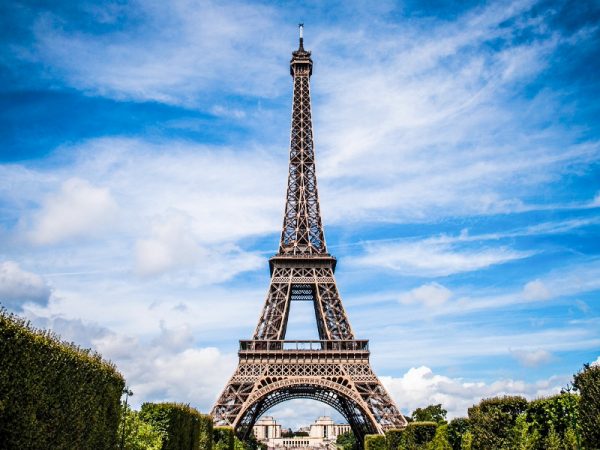
Gustave Eiffel’s team, including Maurice Koechlin and Émile Nouguier, designed the Eiffel Tower using aerodynamic wind-resistance principles. The base of the tower rests on four massive arched legs, which curve inward as they rise, creating a tapered profile that reduces wind resistance.
Each of the tower’s three levels offers observation decks with increasingly spectacular views. The top level reaches 276 meters, offering a breathtaking panorama of Paris. The elevators, a marvel in themselves, move on curved tracks — a rare feat even today.
📊 Eiffel Tower Facts & Figures
|
Feature |
Detail |
|
Total Height |
330 meters (with antenna) |
|
Weight |
10,100 tons |
|
Elevators |
8, including summit-access lifts |
|
Visitors (Yearly Avg) |
6–7 million |
|
Total Visitors Since 1889 |
300+ million |
|
Paint |
Repainted every 7 years |
|
First Lighting |
Electric bulbs added in 1900 |
|
Ownership |
Owned by City of Paris |
✈️ Visitor Information & Travel Tips
🕐 Opening Hours:
Daily from 9:30 AM to 11:45 PM (last lift at 11 PM)
🎫 Tickets:
- Adults: €29.40 (summit)
- Youth (12–24): €14.70
- Children: €7.40
🛤️ Best Time to Visit:
- Early morning or after sunset
- Avoid weekends and holidays for shorter lines
📷 Photo Tips:
- Trocadéro Gardens (best for panoramic shots)
- Champ de Mars (classic angle from the front)
- River Seine boat rides for twilight captures
🎨 Cultural Significance
The Eiffel Tower symbolizes the modern era of France, representing both national pride and scientific advancement. It’s featured in countless films, novels, advertisements, and artworks. In fact, during WWII, Hitler ordered it torn down — but French resistance delayed and disabled the lifts, keeping it off-limits.
In literature and film, the tower is often portrayed as a romantic setting or an engineering wonder. From James Bond to Ratatouille, it remains an iconic cinematic backdrop.
🤯 Interesting Trivia
- Originally planned to stand for 20 years only
- Shrinks by 6 inches in winter due to metal contraction
- Illuminated by 20,000 light bulbs at night
- Has hosted everything from marriages to stunts (including parachute jumps)
- Hidden beneath the south pillar of the Eiffel Tower is a little-known underground bunker.
- Named after Gustave Eiffel, but he didn’t design it alone
🌌 Night View & Light Shows
The Eiffel Tower is at its most magical after sunset. The golden lighting begins at dusk, and for 5 minutes every hour, the tower sparkles with 20,000 twinkling lights. The light shows dazzles nightly until 1 AM—extended to 2 AM during summer—while a spinning beacon atop the tower projects twin beams for miles
For romantic visitors and photographers, this view is unforgettable.
🔧 Eiffel Tower Today
Today, the Eiffel Tower remains a fully functioning telecommunication tower and a symbol of Parisian identity. It is also a research lab, weather station, and prime tourism asset.
In preparation for the 2024 Paris Olympics, the city invested €380 million in refurbishing the tower, including new elevators, fresh paint, and upgraded visitor experiences.
❓ FAQ
Q: Is it possible to walk up the Eiffel Tower?
Yes, visitors can reach the second floor by climbing approximately 674 steps. The top level is only accessible by elevator.
Q: Is the Eiffel Tower open year-round?
Yes, it’s open 365 days, though hours vary in winter.
Q: Are there restaurants inside?
Yes, including the famous Le Jules Verne (2nd floor) and Buffet Tour Eiffel.
💬 Final Thoughts
The Eiffel Tower is more than just iron and bolts — it’s a living symbol of France’s creative genius and perseverance. From its revolutionary roots to today’s Instagram fame, it continues to charm millions.
If you’re planning to visit Paris, make sure to see it during sunrise, day, and night — each offers a different emotion. And don’t forget to climb it at least once in your life.
- Would you like me to continue with:
- More detailed travel tips?
- Additional visual content / infographics?
- Translation to French?